

One of the hardest points in aviation is being in the position of being a 0 hour pilot and trying to figure out your route to the flying going from an interest, hobby, or passion to a well-paying career.
I certainly won’t deny that aviation is a very hard place to make a career early on, however there is both nothing more challenging, frustrating and time consuming as getting your private pilots license. But, it will also be the most rewarding and incredible thing you have ever done with your life.
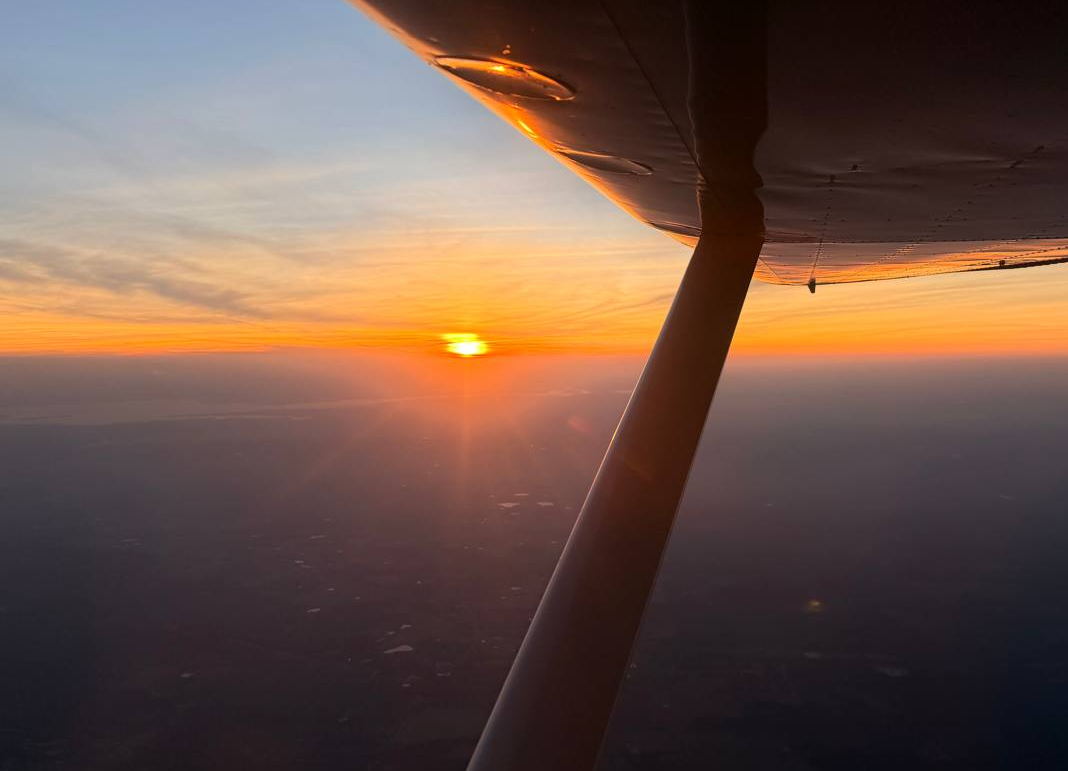
The biggest first question people tend to ask themselves is this:
Can I actually do this?
The biggest concern in aviation of if you can actually achieve being a pilot is often a challenge many students have to overcome. But the one thing I find myself telling my students is this; if you want it bad enough you will find a way to achieve it. We pilots call it “the bug” and it doesn’t bite everyone but if it does you will spend the rest of your life regretting not getting involved earlier for every day you spend thinking about it.
Being involved with flying is passion based, it is certainly not a quick paycheck that leads you to riches overnight. Its long days, hard nights, and the best friends you will ever make. If you don’t want to be here for those long days and hard nights, for years, before the good paycheck comes it probably is not worth being involved in for you.
Whats a medical?
This will be its own article someday, but the biggest thing to ask yourself is to look at your own history or your child’s medical history and think if any specific disorder or illness can cause an issue of safety of flight.
The government is very stringent on what is okay and not okay for a pilot to have wrong with them health wise. To an extreme that is hard to believe–so really, please consider this before allowing your (or your child’s) medical history to get out of hand especially if you have a choice. I understand this is not always the case but its unfair not to say anything at all about it.
If you have any questions, your best bet is to start by talking to a flight instructor and if your medical history is long and complex, consult an Aviation Medical Examiner (AME) in your area.
When should I start?
I’ve had countless folks want to get into flying as a second or maybe even third career, so that is entirely achievable for someone too. Lots of folks who were prior military or medical are very common fields for second career pilots to come from.
However another very common type of student I work with is kids in high school, or, fresh high school graduates. If able, this is ample time to begin your career in aviation. A private pilot can begin training as young as they would like, the only dates that matter to a new pilot are their 16th birthday (the first day you can legally solo an airplane §61.83 (a)) and their 17th birthday (the day you can legally hold your private pilots license §61.103 (a)). I have had a student in the past who I began training when she was 15, she soloed on her 16th birthday and obtained her private pilots license on her 17th–and she is now at the Air Force Academy. She was an exceptional student and I really think that it was the perfect age for her to learn the responsibilities of what it takes to become the pilot in command of an airplane.
I am / my child is young, younger than 14 or so and has interest in aviation. How can I get involved now?
A secret hack that is very unmentioned in aviation these days in my opinion seems to be… gliders!
Gliders are something I will get into more detail with later, but, a student can solo a glider as young as 14 (§61.83 (b)) and begin flight training with an instructor as early as they would like. Many glider ports around the United States welcome young folks to get involved with aviation and are happy to take on young volunteers for ground crew operations where they begin to learn the complexities of the aviation environment before flying.
Gliders are uniquely also much more affordable than airplanes per hour. A glider might cost 1/4 of what an airplane might per hour, or less (My club charges about $35 per hour depending on the glider). The benefit to learning in gliders before airplanes is obviously, you can start much earlier but that flight time is still considered fixed wing and will count towards a pilots commercial flying career down the road.
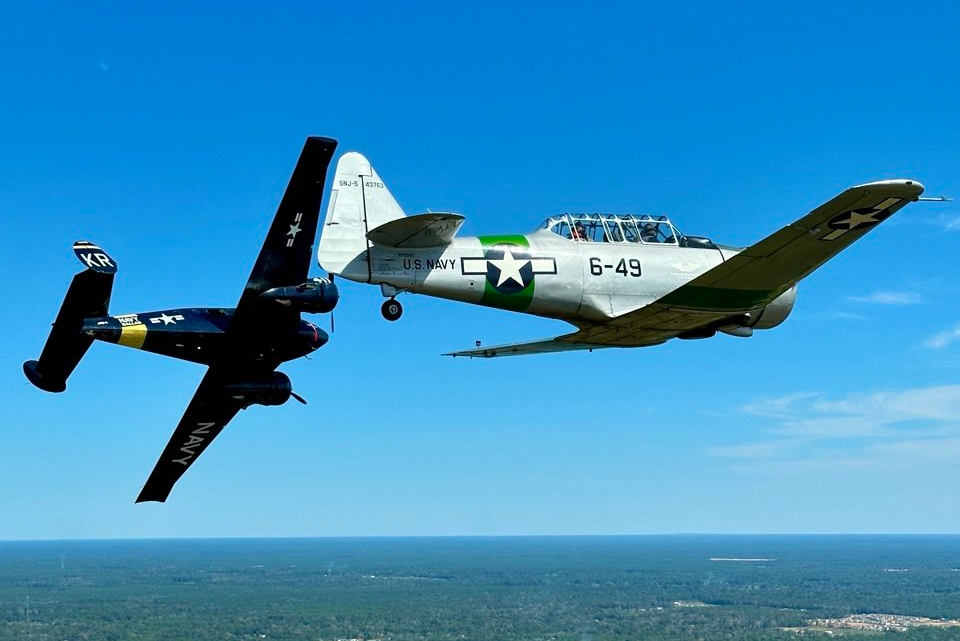
When can I make that good pilot money?
I hate to say this but, the money takes time. If you’re here for the money, leave now, because if you haven’t got the passion for the flying you wont survive the hard few years where you spend all your time giving it up to the studying, time building, and work.
The typical career progression (simply) goes a little like this:
Private Pilots License (airplane single engine (PPL)): this is a required 40 hours of flying (§61.109 (a)) but national average of how much flying it really takes is around 60 hours.
Instrument Rating (airplane (IR)): this rating will use hours from your private pilots license for the regulation to be satisfied (§61.65 (d)) but it takes roughly an additional 50 hours of flying to achieve. This rating is technically optional and you can move onto commercial but that imposes some limitations on the pilot.
Commercial Pilots License (airplane single engine land (CSEL)): this rating can be achieved at 250 hours of flying (§61.129 (a)) and it is pretty standard to be right around that hour count to achieve this rating (its at this point that you can legally start making money). Caveat though, it is tough to find a flying job with what is known as a “wet commercial” rating (in the sense of your signature on the back is still wet).
The next rating is usually one of two things, but both are valid career paths and most ideally you do both back to back:
Certified Flight Instructor (CFI): This rating has no minimum hours, however it is one of the hardest ratings a pilot can attain. The depth of knowledge required to become a CFI is tough to obtain, and it comes from long hours studying and developing lesson plans. Being a CFI is the easiest first job to get as a new pilot with limited flight time. You will learn a lot from watching students, so being a CFI is very desirable to an operation looking to hire a pilot. However being a CFI is not for everyone, so keep that in mind.
Commercial Pilots License Multi Engine Add-On (airplane multi engine land (CMEL): This rating also has no minimum hours associated with it, as it is an “add-on” to the single engine rating that the commercial single engine pilot already has. You fly the multi engine airplane until you demonstrate proficiency in the airplane and you are eligible to take your check ride. This allows you to take your career to new levels and fly bigger airplanes.
There are other ratings on top of this that a pilot might get early on to expand their horizons as an instructor or pilot, but the ones above are the primary ones that a pilot will need.
The big caveat!
Getting your commercial single or multi engine pilots license does not make you eligible to work at an airline or a large cargo operation!
To be able to work at a large air carrier operation you need something called an Airline Transport Pilot (ATP) rating. To be eligible to obtain this rating you must have a total of 1,500 total flight hours consisting of various types of flight time as described in §61.159 (a).
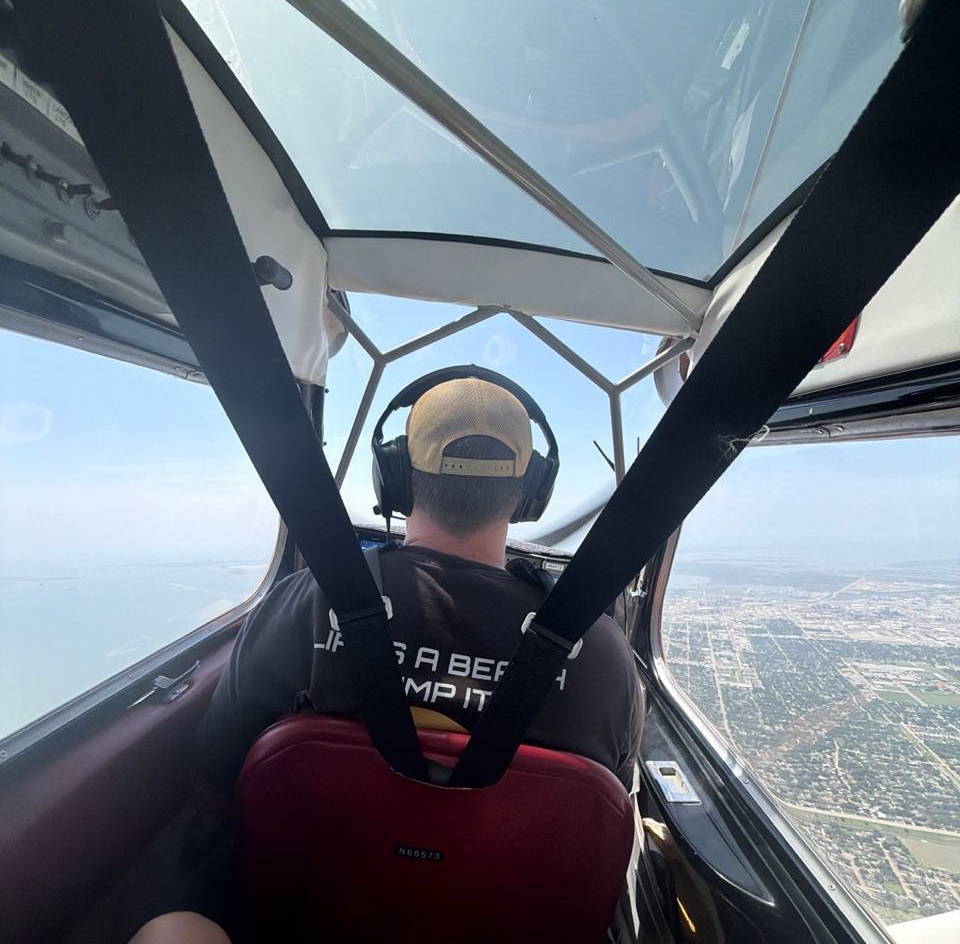
How do I get from 250 hours to 1,500 hours before I can have an airline job?
There are many ways but the most popular is to become a flight instructor. Flying with students gives both the instructor and the student flight time in their logbooks, and getting to that magical 1,500 can take as little as 1.5 years if you work hard enough at it. Being a CFI at a flight school can cause a pilot to approach burnout very quickly however, and you will not be paid very well, which is rather standard in this industry unfortunately.
This is where the long days, hard work and tiring times come in. It sucks, but we have all been there and done it.
However there are other jobs that a commercial pilot can obtain such as skydive, banner towing, survey, air tours, and if you’re lucky maybe land a job as a first officer in a private jet type operation.
There are also areas in aviation where you can volunteer to do some flying and obtain hours without having to pay the hefty price for them, such as towing gliders!
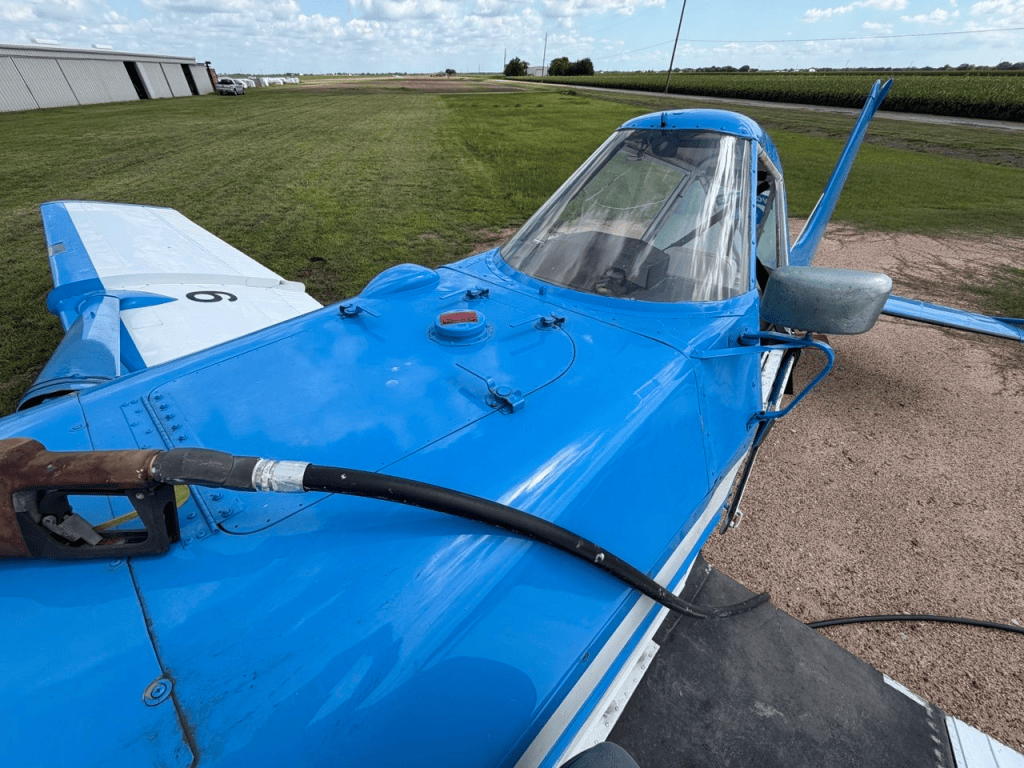
But this college says I only need 1,000 hours before I can go to the airlines, what is that about?
Some colleges are known as Part 141 schools. These aviation universities have collegiate programs where you obtain a bachelors degree paired with flight training. You can attend one of these colleges and pair your flight training with the schools standard college classes.
Some things to note, if you choose to attend an aviation university you do not get to choose the flight school you fly with. The university will have schools they are partnered with or their very own internal program. Another thing about 141 programs is they tend to be very expensive even compared to standard flight training which is something for a student to be aware of. You usually have to pay tuition at the school as well as the associated flight fees–so its much more than you might expect to pay.
The benefit to a 141 program is that if you complete your Instrument Rating and Commercial Single Engine ratings with the school, you are eligible for your restricted ATP–allowing you to operate at an air carrier with a lower number of total hours; which is 1,000 total flight time.
So how much does this all cost?
I hate to say it but simply put, too damn much. If you choose to attend flight school in a traditional fashion without university, it can be done for probably around $60,000 said and done including check ride fees, books, and other tools a student might need.
However it wouldn’t be unheard of for it to cost more depending on the area you live in due to the cost of renting an aircraft being variable per school and location. If the cost of living in your area is high, expect to pay more per flight hour.
A part 141 collegiate program can cost in excess of $100,000 or more after tuition, fees and flight fees which is not unheard of either. They often charge a premium as well due to the enticing fact that you can get to an airline faster. 500 less hours when operating as a CFI in an underpaid environment without air conditioning when fighting with the weather is a solid 6 months or more chopped off your instructing career.
A semi hidden cost I would say is the cost of a checkride. A checkride itself now costs roughly $1000-$1500 each, which are often paid in cash the day of the checkride to your examiner. Keep that cost in mind, because if you’re working on your 3rd or 4th rating that cost can add up.
As a note, it typically costs $160-$200 per hour to rent a typical training airplane at a standard flight school in 2026. Additionally you will have to pay your flight instructor which ranges from $60-$80 per hour. (This seems like a high pay rate but more often than not that pay rate is not what the CFI is being paid per hour but rather what the school charges, the CFI likely gets a portion around 1/2 of that rate or less as take home pay)
What tools do I need to start?
Simply put? None.
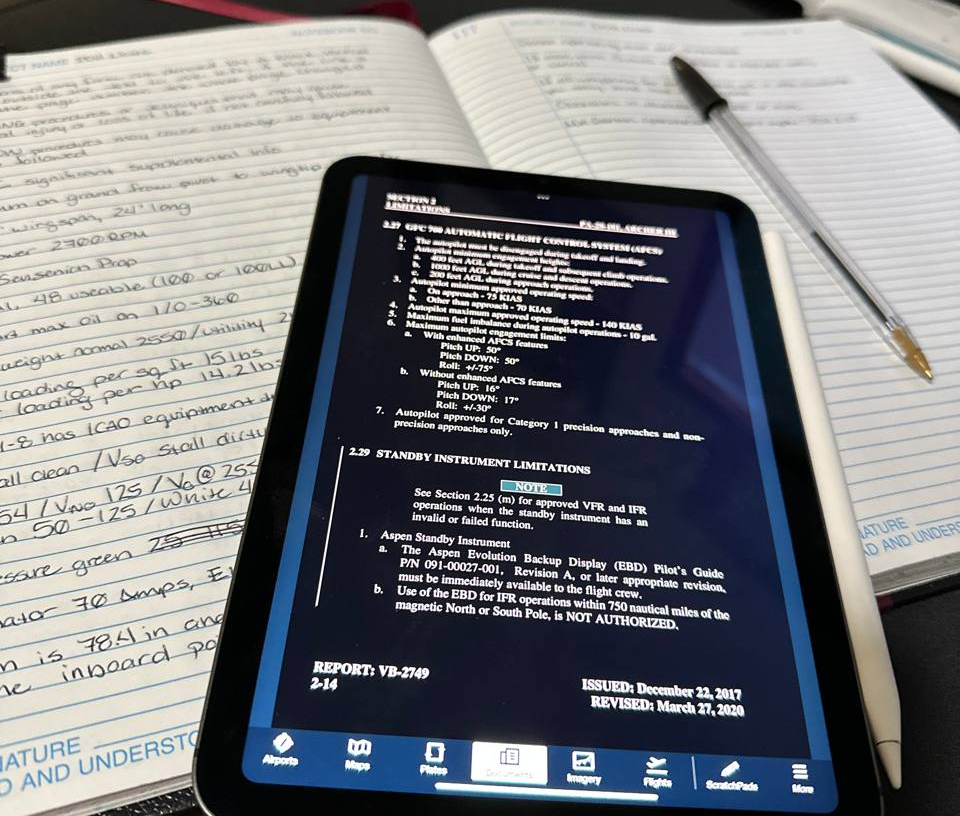
A few tools us pilot use a lot that most folks don’t realize they will need are a headset and an iPad.
On your first flight you don’t need either of these tools but it is important to note that you will need them at some point due to the high cost of both items.
Pilots use iPads for various apps (Foreflight, Garmin Pilot ect.) involved with flight planning. Eventually if you’re looking to go pro, you will need one. I recommend always the newest iPad mini with cellular because accessing weather information at remote airports is very nice. But, it can be something you purchase down the line in your training.
A headset is something you also are going to want one of your own rather quickly. You can go mild to wild on price range, but personally I am one of those “buy once and never again” type people and have been using the same Bose headset that came with a hefty $1,100 price point for the better part of a decade.
The books we use for flight training and learning such as the Pilots Handbook of Aeronautical Knowledge (PHAK) and the Airplane Flying Handbook (AFH) are free through the Federal Aviation Administrations (FAA) website and can be found in PDF format for easy downloading. If you want printed forms of these books you can order them on Amazon though!
But what about…?
Its okay, just ask. I have probably heard it before.
I tell all my students that my messages are free, but making me drive somewhere (especially the airport when it is hot outside) is not.
So please drop me a message if you have any questions.


Leave a comment