
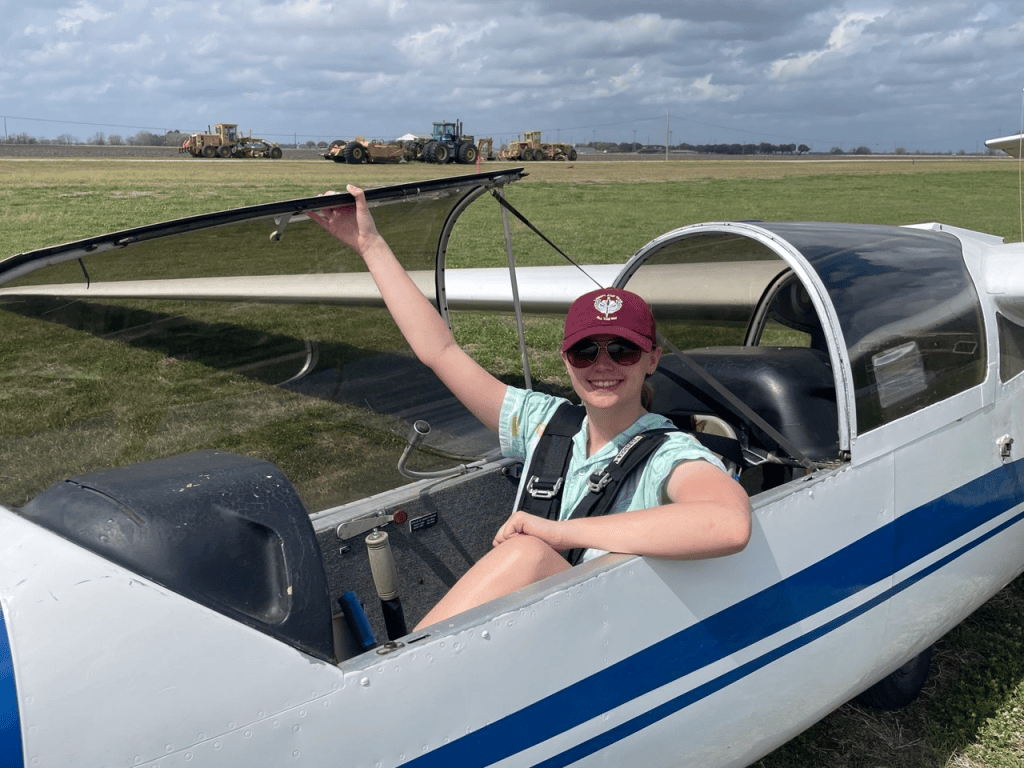
One of the hidden secrets in aviation both for folks who are young and interested in getting their pilots licenses as well as individuals who are building time between their commercial ratings and that coveted 1500 hours is glider flying.
I say this as two different people however, one who is a huge fan of the glider community and what the community provides in raw skill to young aviators but also as a CFI who sees many young folks get their ratings and suffer from the financial strain that comes with flight training and renting airplanes. I think it is a wonderful sport to join which teaches pilots the finer points of energy management and is a great avenue for quality pilot in command time for very cheap and quite fun time building.
So lets take a minute and discuss some of the rumors and misconceptions involved with gliders, and why its so worth it to get involved.
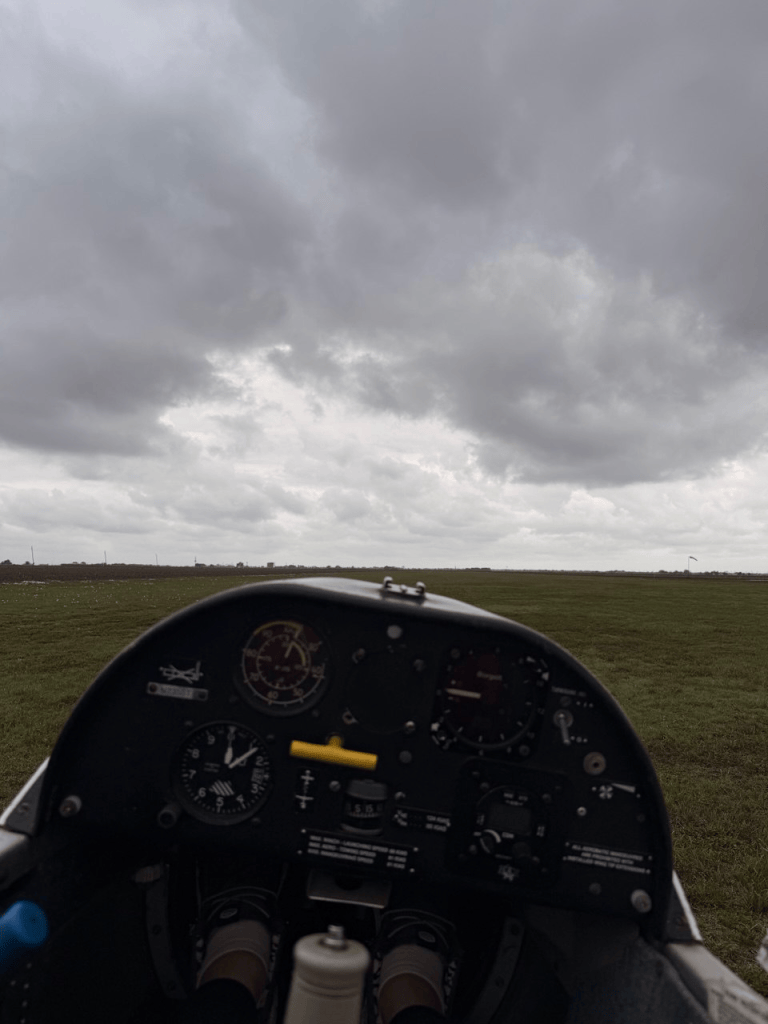
Don’t you just go up and down like a sled ride?
Short answer? Absolutely not.
Gliding is an international sport and its very common to get towed up to a few thousand feet which takes about 10 minutes and you release from the towplane or ground launch system. The art of gliding is not just a downhill sled ride, which is why we in the business call it soaring. Spending hours aloft on a good day with nice thermals isn’t even necessarily a challenge and you can travel quite long distances as well due to how efficient the aircraft are.
I get daily emails from my club when we fly that lets me know how long everyone flies each day, and in the summer its not unheard of to hear of 5 and 7 hour flights per day (yes, off one single tow).
But isn’t flying without an engine scary?
If anything, its quiet and calm. Gliders are designed to be very efficient, even lower performance training gliders will glide about 3 miles per 1000’ of altitude above the ground. With a little bit of planning, its very easy to manage your energy and get back to your departure runway safely.
In a way I almost feel safer in a glider, as for the number of things that are even available to catch on fire or have a failure are much lower. So for me it is almost like flying an airplane, but, even less to go wrong.
The community
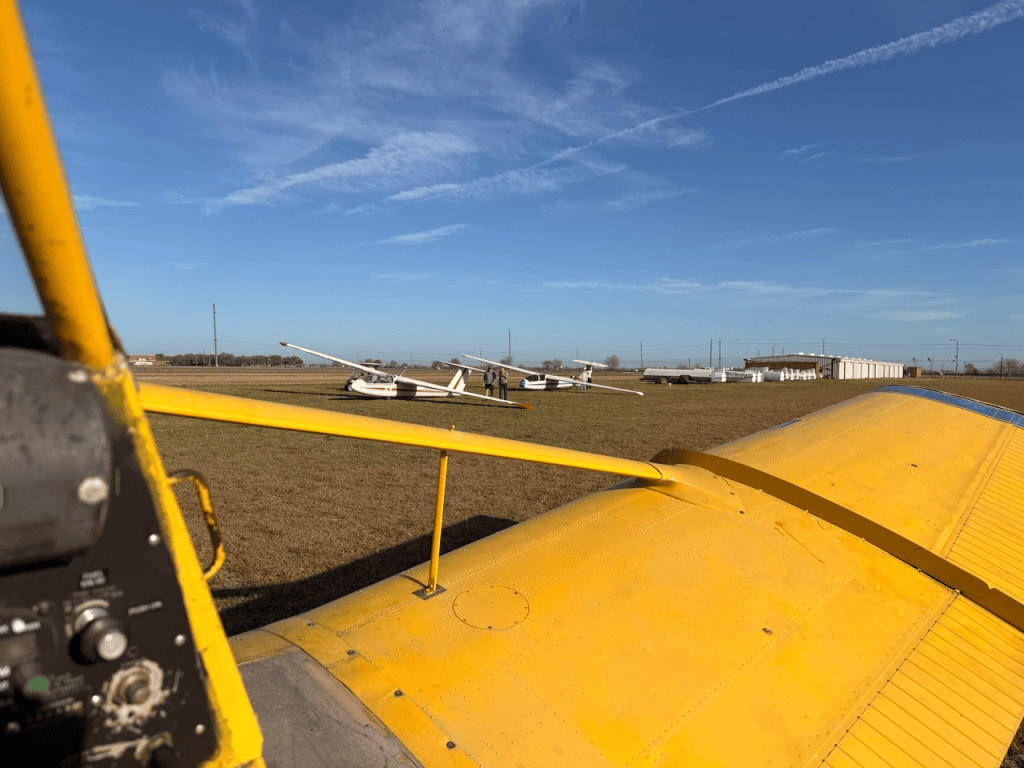
I got into gliders by complete accident— I was interested in joining the local glider club in order to gain access to their Cessna 188 AgWagons for tailwheel time building. I had passive interest in doing my glider add-on eventually, but, once I got the opportunity to try it through the required glider tows I had to experience to obtain my tow endorsements, I understood what all the fuss was about. (Side note, most glider clubs are always looking for tow pilots which can be a great avenue for cheap or free high performance and often tailwheel time if you’re interested in becoming a glider pilot it can be especially attainable in a reasonable amount of time.)
The glider community is, as a whole, made up of both professional pilots who have a side hobby in a challenging new aviation environment and pilots who have no medical and are still interested in flying. Its a great avenue for making contacts and friends, and I quite like the environment around the glider port due to the lack of competitiveness you see around most GA airports these days. The CFIs or up and coming pilots aren’t at each others throats for flight time since in gliders there is no “commercial” job to claw at each other for. The folks at the glider port are there because they want to be.
What can soaring do for my career?
There’s two big reasons I think new aviators should be more interested in soaring. The first group that soaring should appeal to is really young aviators, those folks who are too young to fly airplanes just yet. You can solo an airplane at 16, but you can solo a glider as young as 14. If you or your child are interested in aviation and you’re wanting to learn to fly, a good avenue might be starting here. The flight time counts later down your career, and is still applicable even though it isn’t in an airplane. Most glider clubs are full of incredible career pilots who are happy to mentor young folks into professional aviation and to learn the responsibilities associated with flying.
A big thing to remember though is these clubs and organizations are not babysitters, and for every kid I’ve personally met with a passion for aviation and learning I have met a half dozen others who’s parents are shot-gunning their kid at any sort of interest they can have to get something to stick. I caution against this, in aviation we have too much to lose and the consequences for negligence and a lack of respect for what we do are high and it can become very dangerous very quickly for everyone involved. But I also have had a 9 year old flight student who was a pure gentleman, and would confirm our documents are correct and preflight the airplane by himself. So this is a case by case basis, and I would welcome any young aviator with the passion and drive into my aircraft regardless of age.
The next subset of people that should consider soaring as an option are those folks between the stages of getting their private pilots license and getting to the magical 1500 hours for ATP. It takes a bit of effort to get from the 60-70 hours that is national average for private pilot to then move onto the 250 hours of commercial and then 1500 past that, but most folks forget that even though you’re attempting to obtain airplane ratings, not all of the hours required for the licensure are required to be airplane hours.
For brevity, I am going to reference only §61.159 for Airline Transport Pilot (ATP) applicants. What I say still applies to §61.129 for Commercial Pilot applicants or R-ATP, so go take a look at the regulations to get a good understanding of each phrasing specifically.
Everyone knows that getting 1500 hours is the magical big step towards a real job in aviation, as that allows you to qualify for the big license which puts you in an airline or cargo operation. Typically the kosher way to get those 1500 hours is to be a flight instructor for about 2 years to gain the appropriate experience. However I am fully aware that teaching is not for everyone, but I always will recommend getting your CFI rating and trying it because of the amount of knowledge that you can gain as an instructor in such a short period of time. Nothing will hone your skillset and knowledge more than working with students for a couple hundred hours.
In the §61.159 regulation, it states that only 250 hours of the 1500 total time required must be logged in an airplane. A lot of folks get hung up on the cross country requirement of 500 hours, but crazy enough you can fly cross country in a glider. A 55 NM cross country that might take a 1.8 in a humble 172 you might spend 6 hours working toward in a glider on a challenging lift day. The way the regulation is written is based on flight time not numbers of flights, so one good 6 hour day is more productive than a shorter day of 1.8 when attempting to achieve the same distance.
Understanding the regulation is very helpful in allowing a pilot to broaden their horizons and look into doing something different so you don’t hit that dreaded burnout later in that 1500 hours.
Getting to the point of solo if you’re already a licensed pilot is pretty quick, I think I managed to be solo capable in 9 flights total. And as you, a licensed pilot know, solo flight is PIC time and you’re already logging those hours. I did my commercial glider add-on rating in a total of 9.7 hours over the course of a month and a half. I think all of the flying I did plus my check ride fee cost me right around $2500.
Additionally, you can also become a tow pilot for your local glider club. Every club and their insurance is different but this is a GREAT avenue for low cost tailwheel time with minimal experience.
Medical denied or deferred?
If you’re in that unfortunate and dreaded position where your medical is denied or deferred, you can always come fly gliders. A medical isn’t required at all.
This means you can build flight time as a pilot in command (PIC) while working your way through the deferral process which can be quite time consuming sometimes taking years at a time. Go take a look at my article about medicals with an account from a pilot with an autism diagnosis that spent 3 years working on his medical if this subject is new to you, and it cal help you get a better understanding of the process.
However, if your medical is denied altogether for whatever reason you can come fly gliders no problem. I have advised a few people to do this, because again, you’re still building PIC time as a pilot of a fixed-wing aircraft. This is a great demonstration to the FAA that you as a pilot are capable of managing to fly an aircraft safely down the line if you ever appeal that denial.
But more important the medical process is changing, and for the better too. The FAA is working on its rather archaic medial standards and they are becoming more relaxed with better avenues for individuals who have well-managed illnesses. This can be seen with the FAAs new regulations regarding MOSAIC and Basic Med. Obviously, none of it has been perfect and there is plenty of room for improvement but it really is improving. So maybe someday your 1000 hours of glider time will be a massive chunk of your future ATP rating.
Costs?
The neat part about flying is it costs significantly less than flying powered aircraft, often by more than 80% per hour cheaper. My club rents gliders at around the $30 per hour plus $30 (based on altitude) per tow mark. So an hour flight can cost as little as $60. But on a good lifty day, you might be able to stretch that flight to 3 hours or more off of that one tow fee. Our clubs CFI-Glider (CFI-G) are all volunteer, which helps keep the cost down on the students as well, but not all clubs are this way.
Being a club as well, there is often initiation and monthly membership fees. This varies quite a bit and you will have to do some investigation in your local area and see what is available to you.
The nice part about gliding is that the community is rather small and tight-knit, meaning that the scholarships out there associated with the Soaring Society of America (SSA) or its affiliates like the Women’s Soaring Pilots Association (WSPA) are rather common, and not terribly hard to qualify for. Since soaring is often welcoming of newcomers and young folks, most of these scholarships are written for aspiring pilots under 18.
Lasty, you barely need any material supplies to be able to begin your soaring career. In airplane flying, owning a headset and iPad these days are early musts which can have its own pretty spendy price tag. With soaring due to the low noise environment and prioritization of looking outside for navigation, neither of those tools are required. Even the books themselves are rather limited in number, which helps a lot with keeping early on costs down, especially if you find out later that soaring isn’t for you.
The sport and skill
Soaring inherently is a competitive sport, and one of the best feelings is flying in a thermal with a group of your friends each in their own aircraft all circling to climb the highest, to then jump to the next thermal and do it all again.
The SSA provides badges for flights over certain mile distances and length of time in flight and its very fun to work toward them each good flying day you get. Its a competition amongst you and your friends but also one where you’re competing against yourself and your own skills. Working on challenging days is enjoyable, but those days where its hard to come down are just as fun because you can fly faster than your minimum sink speed oolong distances, and there is little consequence.
Soaring is great fun, and as a licensed pilot a lot of stick and rudder skills will be learned due to the nature of the aircrafts designs and the importance of energy management. Flying clean in a thermal and staying efficient will give you your best climb rates, so its appealing to fly the aircraft well.
But the same is true for new pilots who are learning in gliders. Young pilots learning in gliders carry their skill over to powered airplanes, because so much of the flying is the same. Its still a fixed wing aircraft with performance that must be taken into account and the muscle memory of how to control the aircraft does transfer over. Its why I always tell young pilots who are too young to solo an airplane to start in gliders. You start to get the chance to fly alone in an aircraft alone far, far sooner.
Something many people don’t know about gliders is there are glider aerobatics and aerobatic competitions as well for those people who are looking for a bit more of a sporty experience and challenge in the flying, as if standard soaring isn’t enough of a challenge to master.
Try it
In reality, its one of those activities that’s just worth a shot to see if you like it. Most glider clubs offer introductory flights of some form which are often very affordable. You get to fly with a licensed glider pilot and learn a little about the feeling that comes with soaring as well as what the operation looks like and what expectations are.
Flights in gliders definitely dash the rumors associated with the sport, and I always think its important for pilots to learn about other operations within the industry. It helps everyone be a little safer, and a little more experienced as a whole about what this whole career is all about.


Leave a Reply